


Nova Scotia Hodge Podge is a beloved Maritime classic made with the season’s freshest young vegetables, gently cooked and tossed in a rich, silky sauce of cream, salt pork, and a splash of vegetable cooking liquor.
It’s colourful, comforting, and deeply rooted in Nova Scotia heritage — the kind of dish families have enjoyed for generations, especially at the height of summer when the garden is overflowing with tender beans, new potatoes, peas, carrots, and more.
Simple, rustic, and incredibly satisfying, Hodge Podge is the perfect way to celebrate the first harvest and bring a taste of home to your table.


- 10 to 12 whole new baby potatoes, scrubbed well, unpeeled and halved
- 2 cups of baby carrots, cut into bite-sized pieces
- a large handful of fresh garden green beans
- a large handful of yellow wax beans
- 1 cup shelled peas
- 1 small head of cauliflower, broken into florets
- a handful of young asparagus (optional)
- 1 bunch of spring onions (try to get larger sized ones. Cut off and save the tops for another purpose. Use the bulb end (trimmed) and about 2 inches up the light green parts. Cut in half lengthwise)
- (any other fresh vegetables as you have available and in quantities to suit)
- 1 cup diced salt pork (I used 140g of unsmoked bacon lardons as salt pork is not available over here)
- 1 cup of heavy cream or half and half (240ml) (Double or single cream)
- sea salt and freshly ground black pepper fresh thyme (optional)

Young Bush Beans
Fresh green or yellow beans (or even sliced runner beans) are ideal. Their tender snap and mild sweetness are exactly what makes Hodge Podge taste like summer.
Carrots
Choose small, young carrots — they cook quickly and stay sweet. If they’re thicker, slice them lengthwise; if tiny, leave them whole for a charming rustic look.
New Baby Potatoes
These are essential. New potatoes hold their shape, have a creamy interior, and absorb the sauce beautifully. They’re the backbone of the dish.
Freshly Podded Peas
English peas add a burst of sweetness. They cook in a flash — often just a quick blanch is enough if you like them fresh and bright. You can also use frozen peas.
Cauliflower Florets
Use small, tender florets so they cook evenly. Their mild flavour pairs beautifully with the cream sauce.
Asparagus
A handful of young asparagus adds colour and a delicate grassy note. Cook it separately so it stays crisp‑tender.
Spring Onions (Scallions)
Choose larger spring onions if you can. You’ll use the bulb and the pale green part (about two inches up), sliced lengthwise. They melt into the sauce and add gentle sweetness.
Salt Pork or Bacon Lardons
Salt pork is traditional, but bacon lardons are a perfect substitute when salt pork isn’t available. They bring savoury depth and those irresistible golden crispy bits.
Heavy Cream
The cream is what transforms simple vegetables into a luxurious, silky dish. It reduces with the cooking liquor to create the signature sauce. Many people use half and half (single cream) instead of heavy cream.
Sea Salt & Freshly Ground Black Pepper
Season simply but generously. These two bring out the natural sweetness of the vegetables and balance the richness of the cream.
Fresh Thyme (Optional)
A pinch of thyme adds a subtle herbal note that complements the cream and vegetables without overpowering them.
Other Fresh Vegetables
Hodge Podge is wonderfully flexible — “anything goes” as long as the vegetables are fresh and tender. Just avoid beetroot unless you want the whole dish to turn pink!

- Prepare the new vegetables as required. The beans, carrots and potatoes can all be cooked together in boiling lightly salted water to cover, just until tender. (You can cut the beans and carrots into smaller pieces if they are overly long.)
- I add the potatoes first, cook for about 8 minutes, then add the carrots and beans and cook for about 5 to 6 minutes longer, until crispy tender. (Don't over cook. You want all but the potatoes to be crispy tender. It may take you slightly longer to cook your potatoes depending on the size of them.)
- Cook the peas, cauliflower and asparagus separately, just until crispy tender. The peas you may just want to blanch. It depends on how well done you want them. We like them fairly fresh. (I more often than not will use frozen peas as I can't always get fresh garden peas.)
- Drain all your vegetables well, reserving some of the cooking liquor. Toss them together in a bowl and keep warm. (Serving the cooking liquid is essential. This will form a part of the "sauce.")
- Fry the salt pork (lardons) to a golden brown. Add the spring onions, and cook until slightly wilted. (Fried salt pork is often referred to as scrunchions.)
- Stir in the cream and an equal amount of cooking liquor. Bring to the boil and then allow to reduce somewhat. (You want a mixture that will cling to the vegetables and coat then nicely.)
- Add the cooked vegetables and give them a good stir to coat. Heat for several minutes. Season to taste with some salt and pepper and a bit of thyme if desired. Serve immediately. (You can also add a knob of butter if you are not bothered about the calories!)


Nova Scotia Hodge Podge
This is a Nova Scotia traditional dish made with early summer vegetables and the thinnings of garden produce.
Ingredients
- 10 to 12 whole new baby potatoes, scrubbed well, unpeeled and halved
- 2 cups of baby carrots, cut into bite-sized pieces
- a large handful of fresh garden green beans
- a large handful of yellow wax beans
- 1 cup shelled peas
- 1 small head of cauliflower, broken into florets
- a handful of young asparagus (optional)
- 1 bunch of spring onions (try to get larger sized ones. Cut off and save the tops for another purpose. Use the bulb end (trimmed) and about 2 inches up the light green parts. Cut in half lengthwise)
- (any other fresh vegetables as you have available and in quantities to suit)
- 1 cup diced salt pork (I used 140g of unsmoked bacon lardons as salt pork is not available over here)
- 1 cup of heavy cream or half and half (240ml) (Double or single cream)
- sea salt and freshly ground black pepper fresh thyme (optional)
Instructions
- Prepare the new vegetables as required. The beans, carrots and potatoes can all be cooked together in boiling lightly salted water to cover, just until tender.
- I add the potatoes first, cook for about 8 minutes, then add the carrots and beans and cook for about 5 to 6 minutes longer, until crispy tender.
- Cook the peas, cauliflower and asparagus separately, just until crispy tender. The peas you may just want to blanch. It depends on how well done you want them. We like them fairly fresh.
- Drain all your vegetables well, reserving some of the cooking liquor. Toss them together in a bowl and keep warm.
- Fry the salt pork (lardons) to a golden brown. Add the spring onions, and cook until slightly wilted.
- Stir in the cream and an equal amount of cooking liquor. Bring to the boil and then allow to reduce somewhat.
- Add the cooked vegetables and give them a good stir to coat. Heat for several minutes. Season to taste with some salt and pepper and a bit of thyme if desired. Serve immediately.

This content, written and photography, is the sole property of The English Kitchen. Any reposting or misuse is not permitted. If you are reading this elsewhere, please know that it is stolen content and you may report it to me at mariealicejoan at aol dot com.

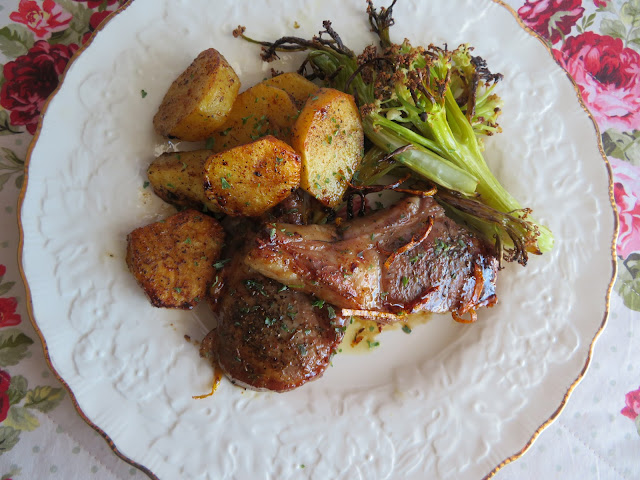

One thing which I really learned to love when I was in the UK was lamb. It was not something which I had ever really eaten very much of prior to going over there to live.
At our wedding supper I had roasted saddle of lamb and it was delicious. I fell in love. It was so tasty! My mother had only ever cooked lamb chops once for us when we were children. I think it was mutton actually as it smelled like she was burning mittens when she was cooking them.
None of us would touch them.

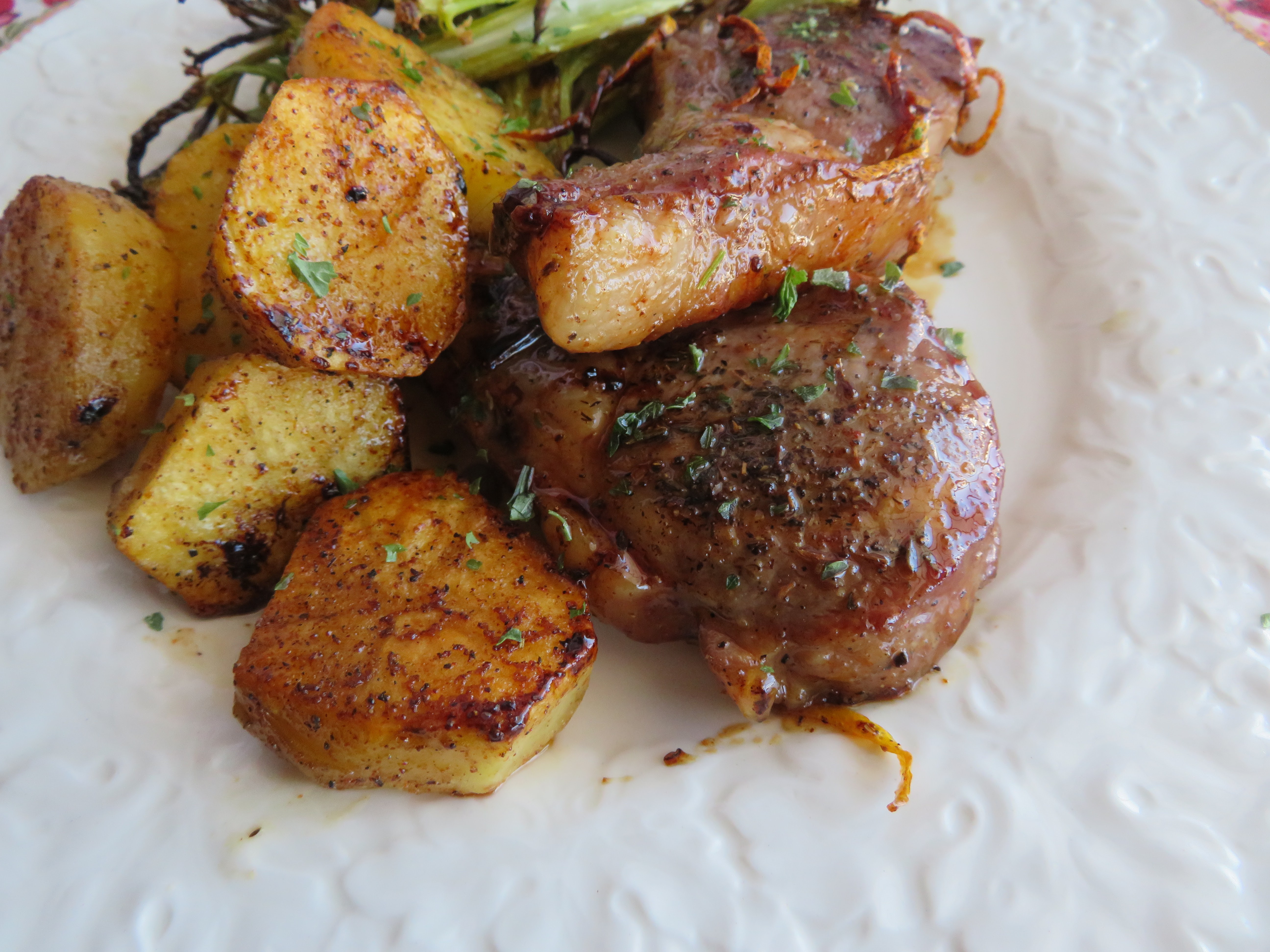


- 4 bone in rib lamb chops, about 1/2 to 3/4 inch thick
- 1/2 tsp dried thyme
- fine sea salt and ground black pepper
- the zest of 1/2 lemon, cut into long shreds (julienne)
- the juice of 1/2 lemon
- 1 TBS runny honey (I used Greek)
- 3 medium russet potatoes, peeled and cut into 1/2 inch thick slices
- 1 TBS butter
- 1 TBS light olive oil
- sea salt, black pepper and paprika to taste


If, like me, you are also fond of lamb, might I also suggest these other recipes to cook:
SLOW ROASTED LAMB SHOULDER - If you are lucky enough to be able to get your hands on a shoulder of lamb, this is the perfect way to cook it. The meat ends up succulent and tender. This is fabulously delicious.
LAMB & DAMSON STEW - Lamb has a delicate almost sweet flavor that goes very well with fruit. You could also use apricots in this stew rather than plums if you cannot get the plums. It is incredibly tasty, especially with dumplings on top!
Lamb Chops with Honey, Lemon & Thyme
Ingredients
- 4 bone in rib lamb chops, about 1/2 to 3/4 inch thick
- 1/2 tsp dried thyme
- fine sea salt and ground black pepper
- the zest of 1/2 lemon, cut into long shreds
- the juice of 1/2 lemon
- 1 TBS runny honey (I used Greek)
- 3 medium russet potatoes, peeled and cut into 1/2 inch thick slices
- 1 TBS butter
- 1 TBS light olive oil
- sea salt, black pepper and paprika to taste
Instructions
- Take your lamb chops and rub them all over on both sides with the thyme, salt and pepper. Set aside while you start the potatoes.
- Melt the butter in a skillet along with the oil. Once the butter starts to foam add the potato slices. Sprinkle all over with the pepper, salt and paprika. Cook slowly over medium heat until just beginning to turn on the bottom, flip over and season the other side with pepper, salt and paprika.
- Cover with a lid and cook on medium low for about 10 minutes, until golden brown on the bottoms and cooked through.
- Increase the heat to medium high.
- Push the potatoes over to one side. Add the lamb chops and sear on one side for 2 to 3 minutes, flip over. Add the lemon zest strips to the pan. Sear the chops on the other side for 2 to 3 minutes.
- Squeeze over the lemon juice and drizzle over the honey. Turn the chops over to coat them in both the honey and the lemon.
- Remove the pan from the heat and leave to rest for a few minutes.
- Divide the lamb and potatoes between two heated plates, spooning some of the juices from the pan over the lamb.
- Serve immediately.





Social Icons